1.4. Anatomical Terminology
Anatomical Terminology
Anatomists and healthcare professionals rely on precise terminology to ensure clarity and avoid miscommunication. Describing a scar as simply “above the wrist” can be vague—does that mean on the forearm or the palm? Instead, standardized language would describe it as “on the anterior antebrachium, 3 inches proximal to the carpus.” This precision is crucial in both academic and clinical environments.
Anatomical terms are rooted in ancient Greek and Latin, lending consistency and universality to their meanings. Most terms are made up of a root (e.g., organ or structure), prefix (e.g., position), and/or suffix (e.g., condition). For example, in hypertension, "hyper" means excessive, and "tension" refers to pressure—indicating elevated blood pressure.
Anatomical Position
To ensure consistency, anatomists use a standard reference posture called the anatomical position. In this stance, a person stands upright, feet shoulder-width apart, toes forward, and arms at the sides with palms facing forward. This position is the frame of reference for all anatomical terms, regardless of actual body orientation.
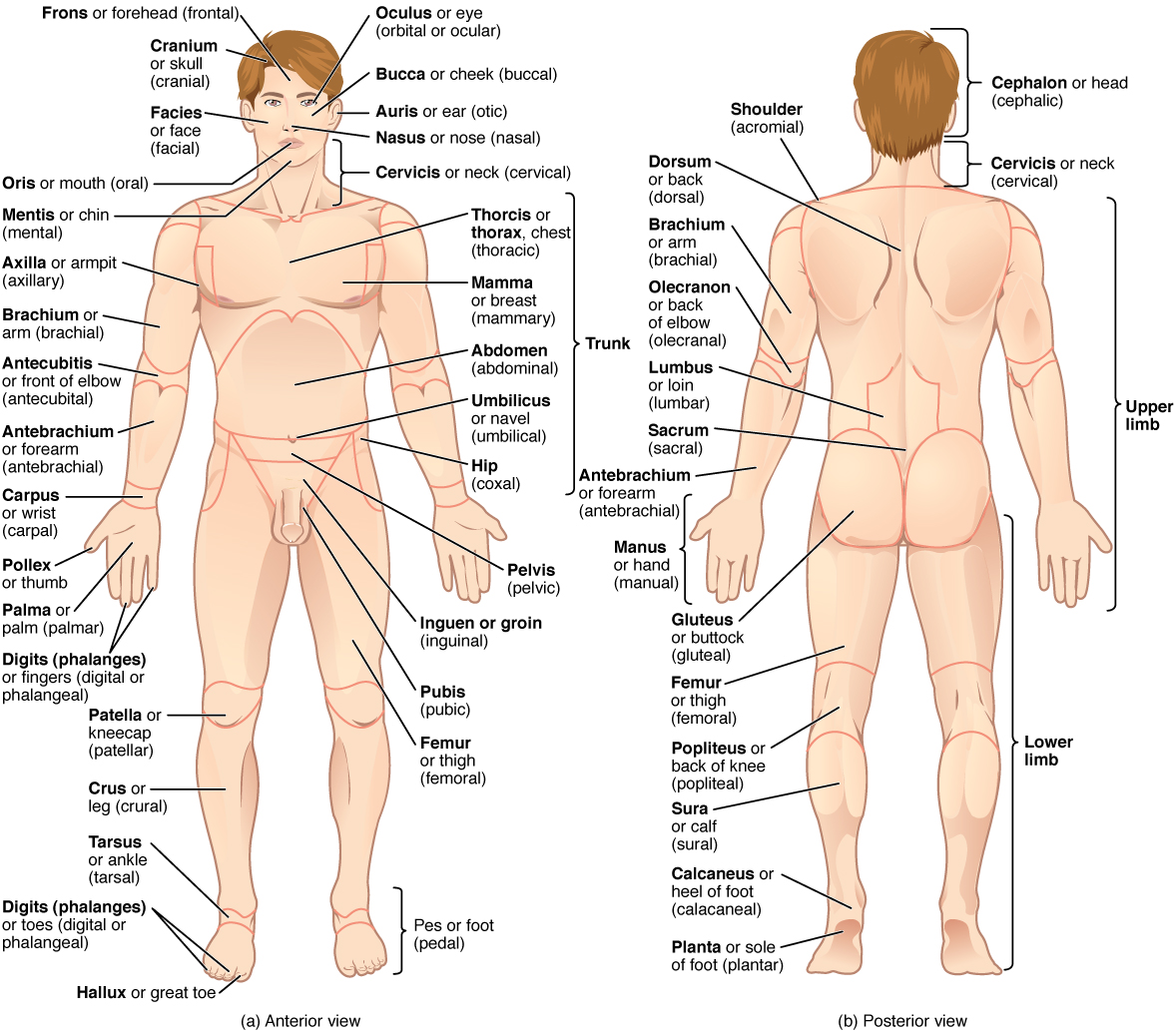
Terms such as prone (face down) and supine (face up) are also used to describe body positions during examinations and procedures.
Regional Terms
These refer to specific body areas and improve anatomical precision. Examples:
- Brachium: Upper arm
- Antebrachium: Forearm
- Femur: Thigh
- Crus: Lower leg
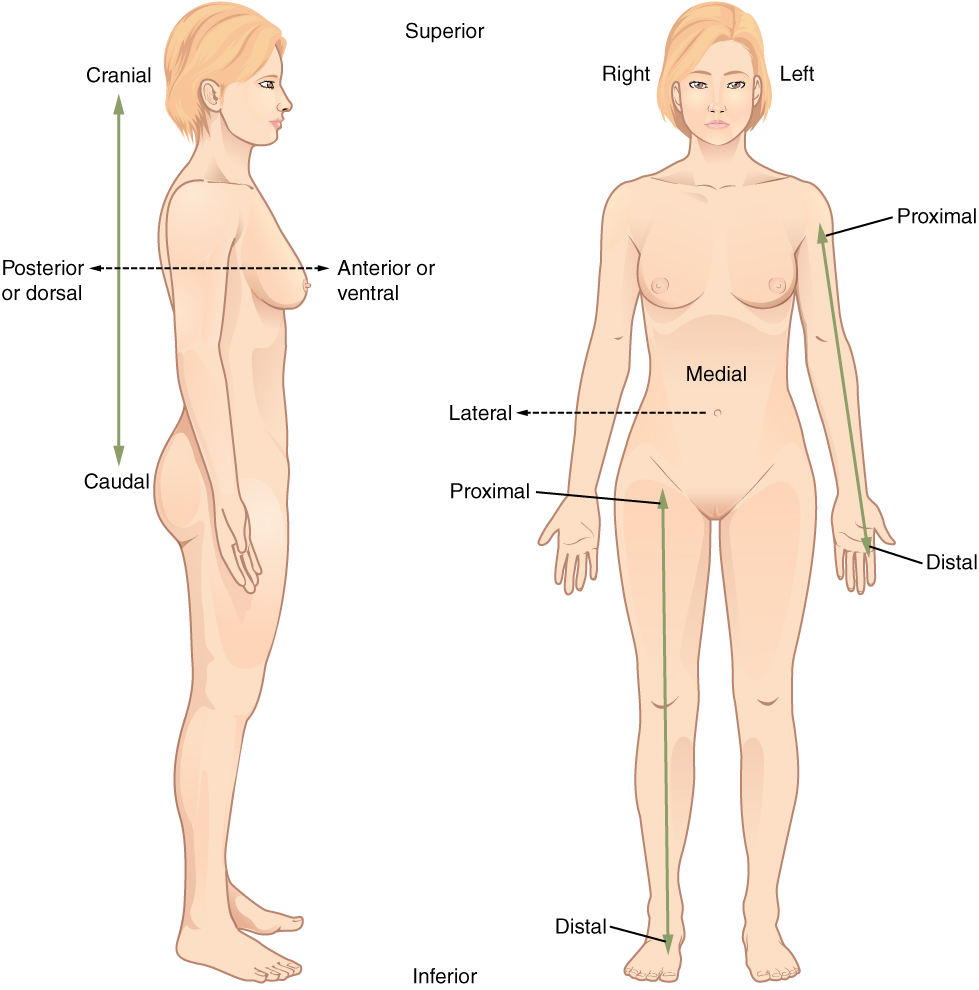
Directional Terms
These describe the relative positions of structures in the body. Mastery of these terms is essential:
- Anterior (ventral): Toward the front
- Posterior (dorsal): Toward the back
- Superior (cranial): Toward the head
- Inferior (caudal): Toward the feet
- Medial: Toward the midline
- Lateral: Away from the midline
- Proximal: Closer to the trunk
- Distal: Farther from the trunk
- Superficial: Closer to the surface
- Deep: Further from the surface
Body Planes
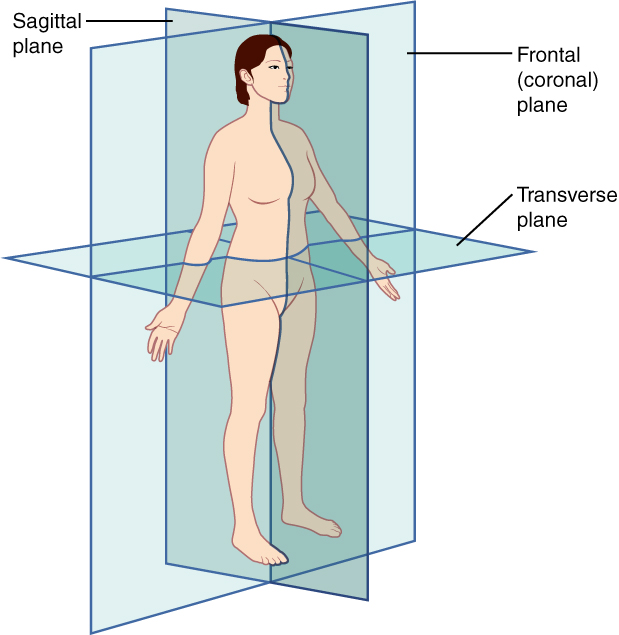
Body planes are imaginary lines dividing the body into sections. These are commonly used in imaging:
- Sagittal Plane: Divides the body into right and left sections
- Frontal (coronal) Plane: Divides the body into front and back sections
- Transverse Plane: Divides the body into upper and lower sections
Body Cavities
The human body is compartmentalized into cavities that house organs:
- Cranial Cavity: Contains the brain
- Thoracic Cavity: Contains the heart and lungs, divided from the abdominal cavity by the diaphragm
- Abdominopelvic Cavity: Contains digestive, reproductive, and urinary organs
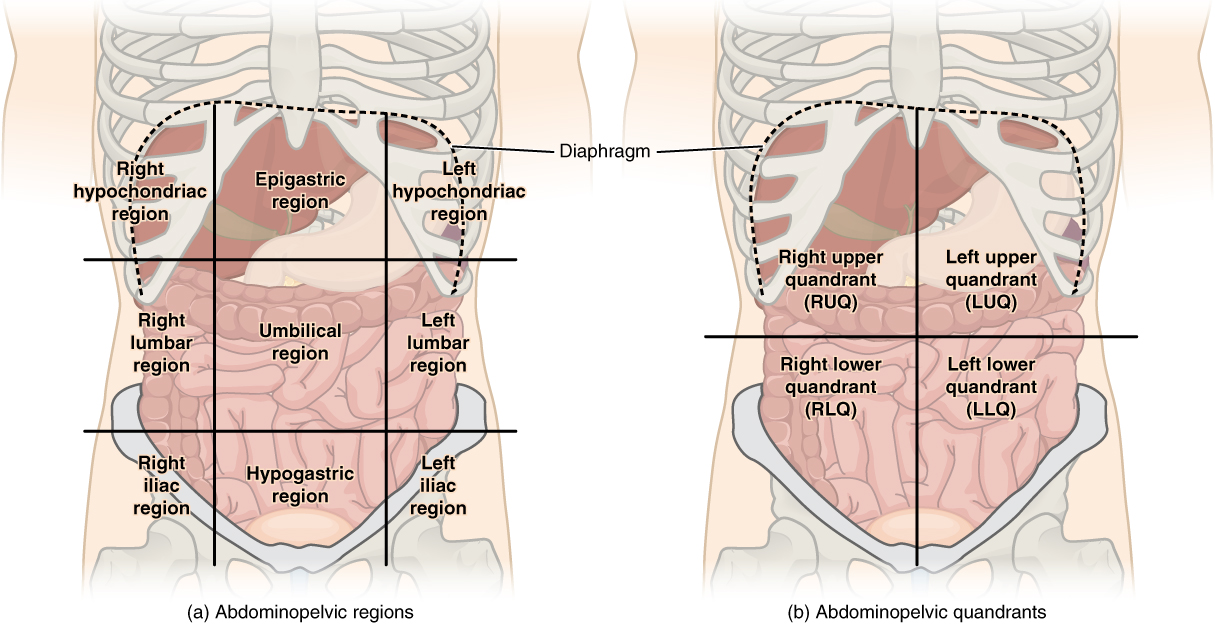
Abdominal Regions and Quadrants
To describe organ locations, healthcare providers use a 9-region or 4-quadrant map of the abdominopelvic cavity: